Moving in with my partner, I realized we share the same space, but have completely different needs. Bloom is a quiz for couples figuring out how to live together.
A way to talk about our differences without taking them personally
Bloom came out of a hard conversation after my partner and I moved in together: why our days ran on different rhythms, and why the way he recharged was not the way I did. The pothos-and-snake-plant line made the conversation easier. His needs were valid, so were mine, and the work was finding the overlap without taking the gaps personally.
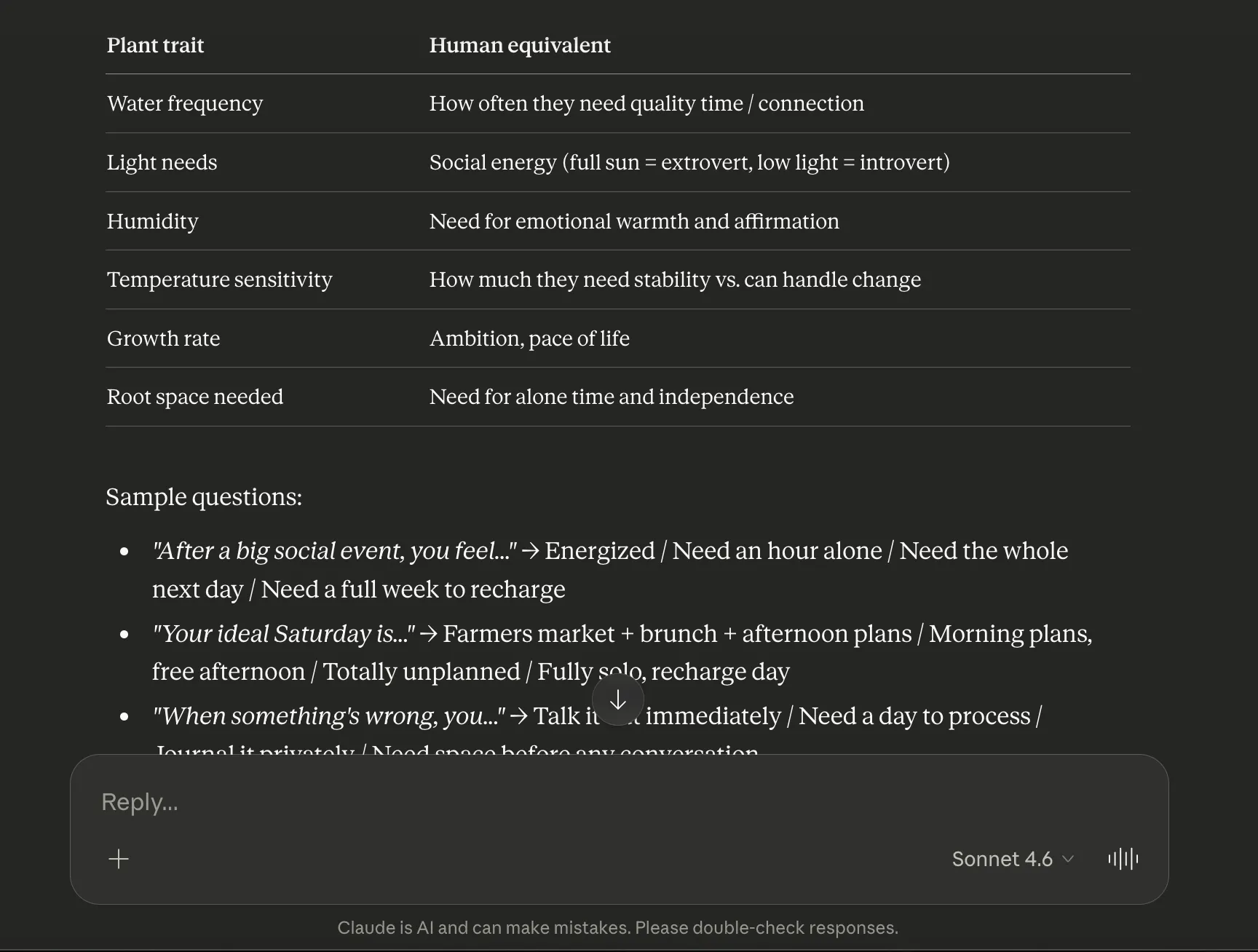
That's the idea Bloom runs on. A Monstera needs full sun and constant water; a cactus thrives on neglect. People have versions of those needs too, but most compatibility tools ask what you value instead of how you actually live. So I mapped plant-care needs to human ones: watering became quality time, light became social energy, and root space became the solitude you need before you can show up for someone else.
The goal was to make the metaphor emotionally useful, not just cute.
I shaped the product and technical direction; Claude Code helped me move from spec to working app.
I set the terms early: I'd own the concept, trait framework, questions, voice, and product logic; Claude Code would help implement the app. That line held the whole way through.
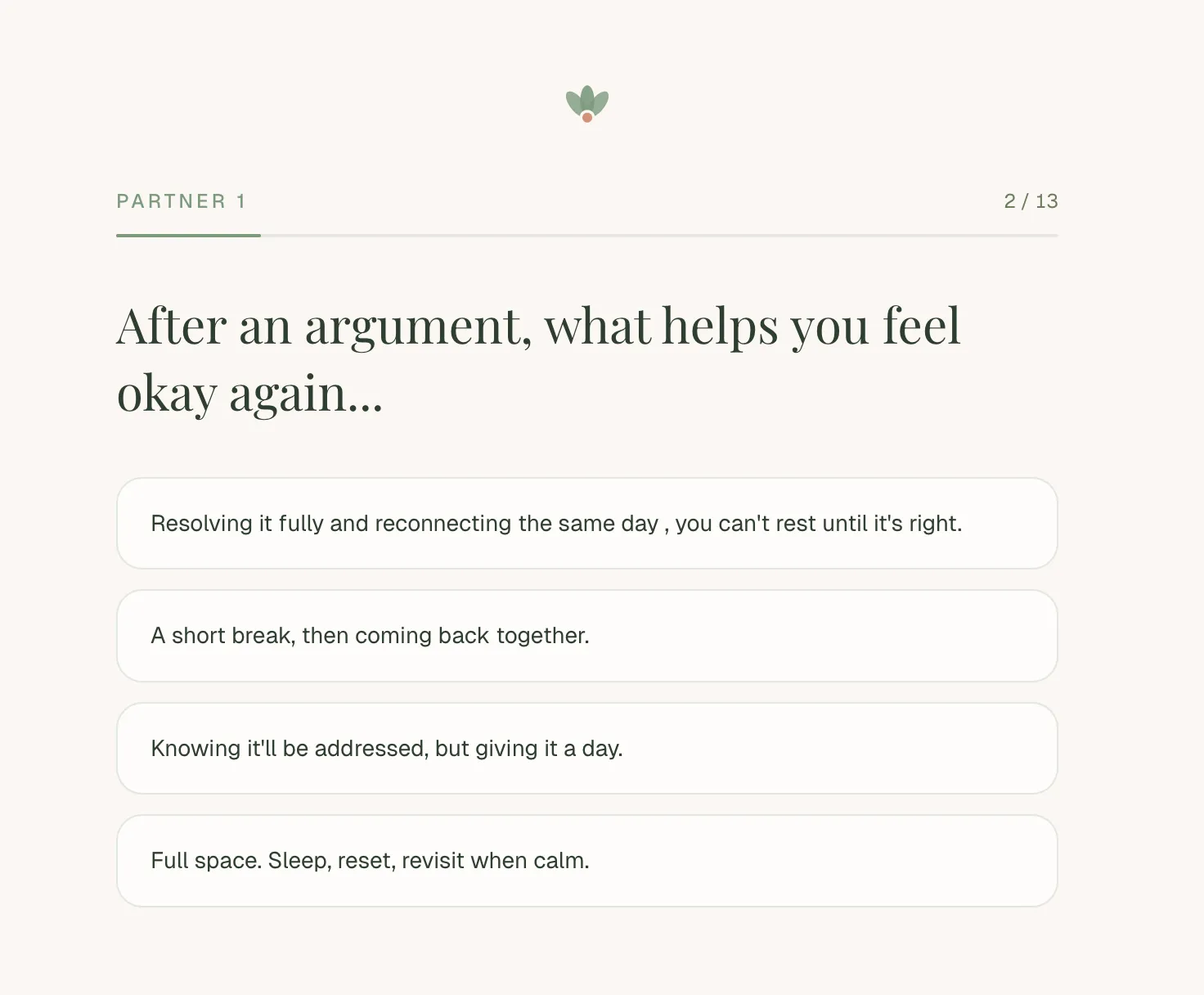
The product took shape in a live chat. I brought the plant analogy; Claude helped map it to human behavior, asked sharper questions, and surfaced relationship friction points I had not named yet: after-work energy, shared calendars, conflict recovery.
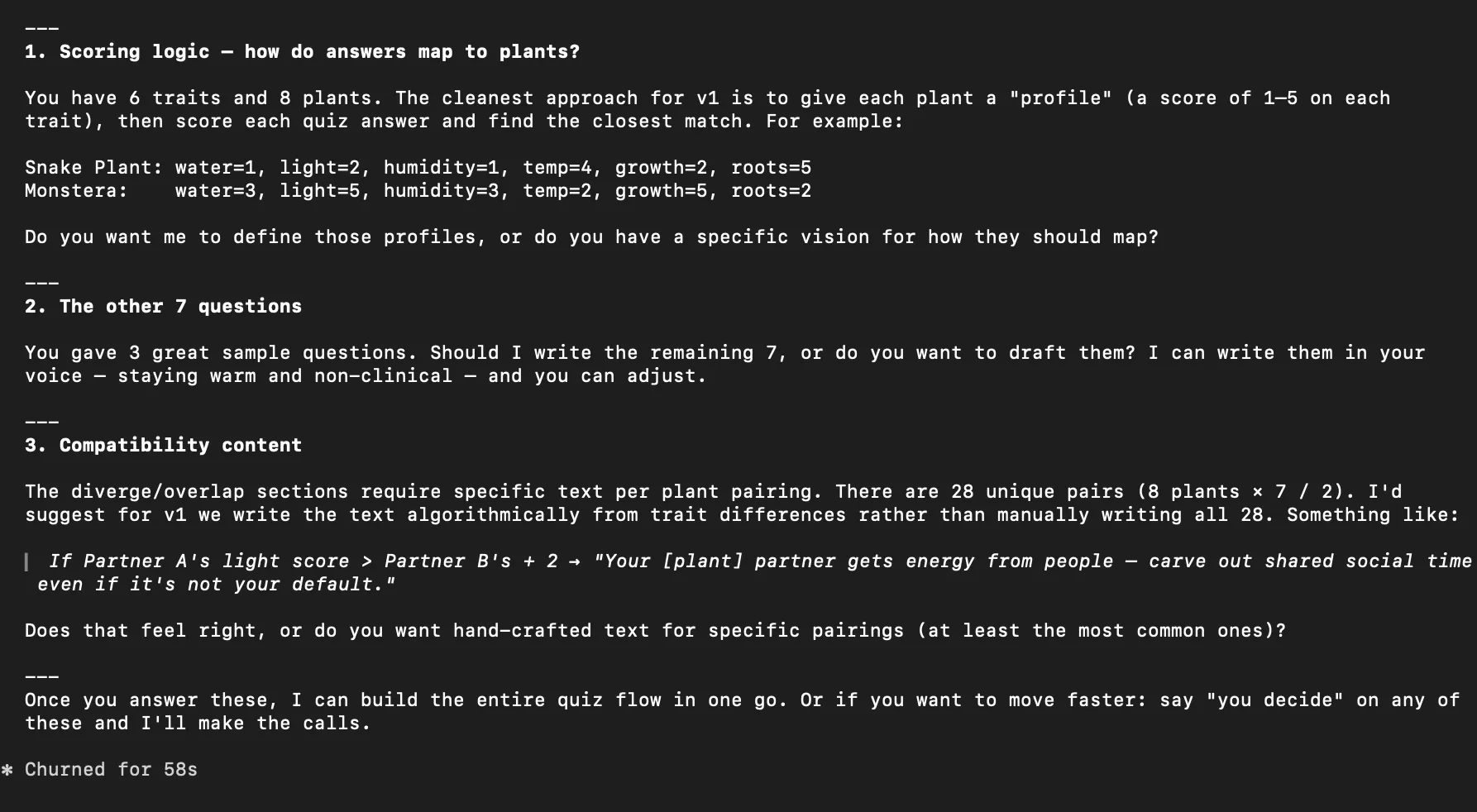
Claude Code implemented the first pass, while I evaluated the quiz data, scoring logic, content structure, and flow against the experience I wanted.
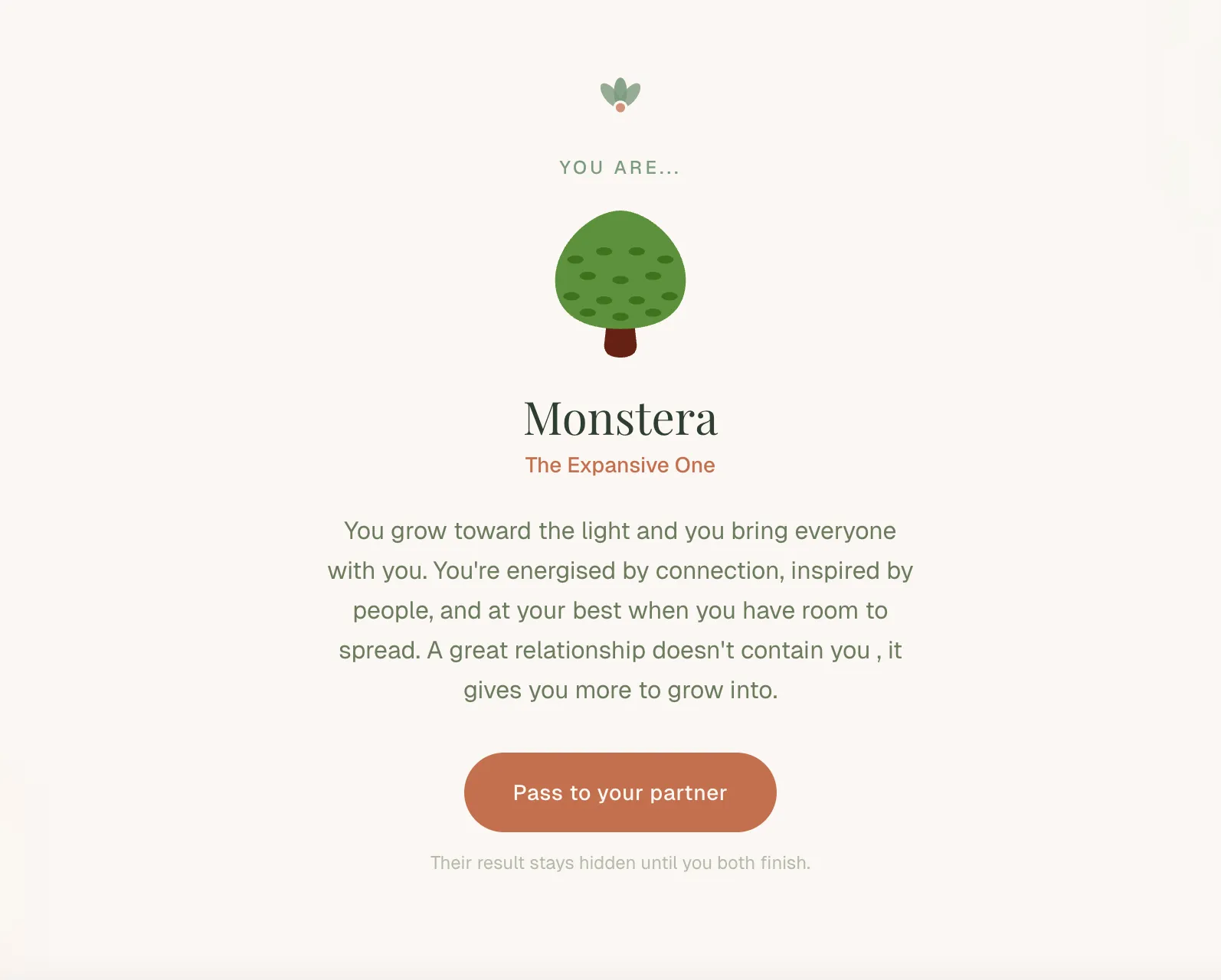
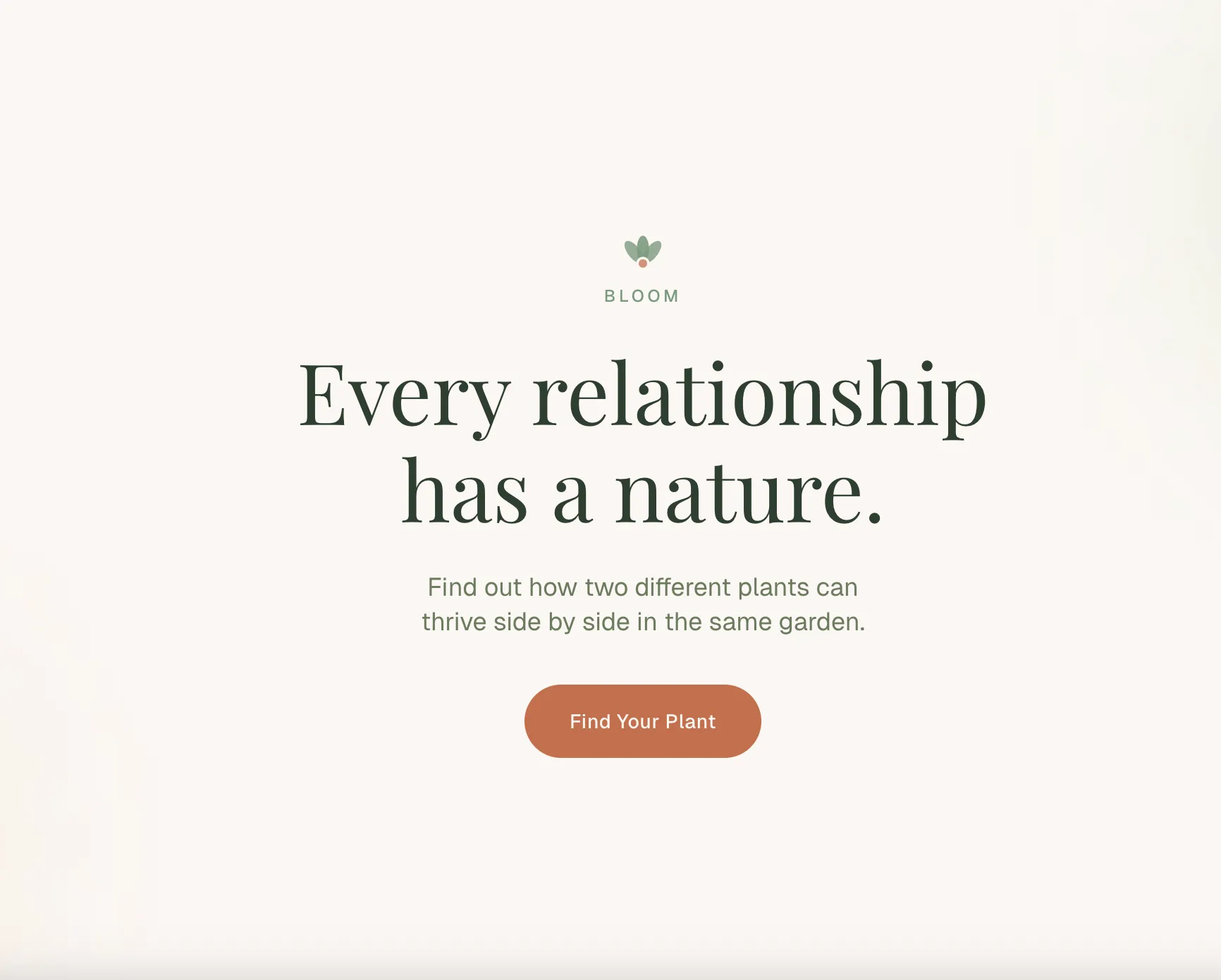
It worked, but the cards felt like data, not people.
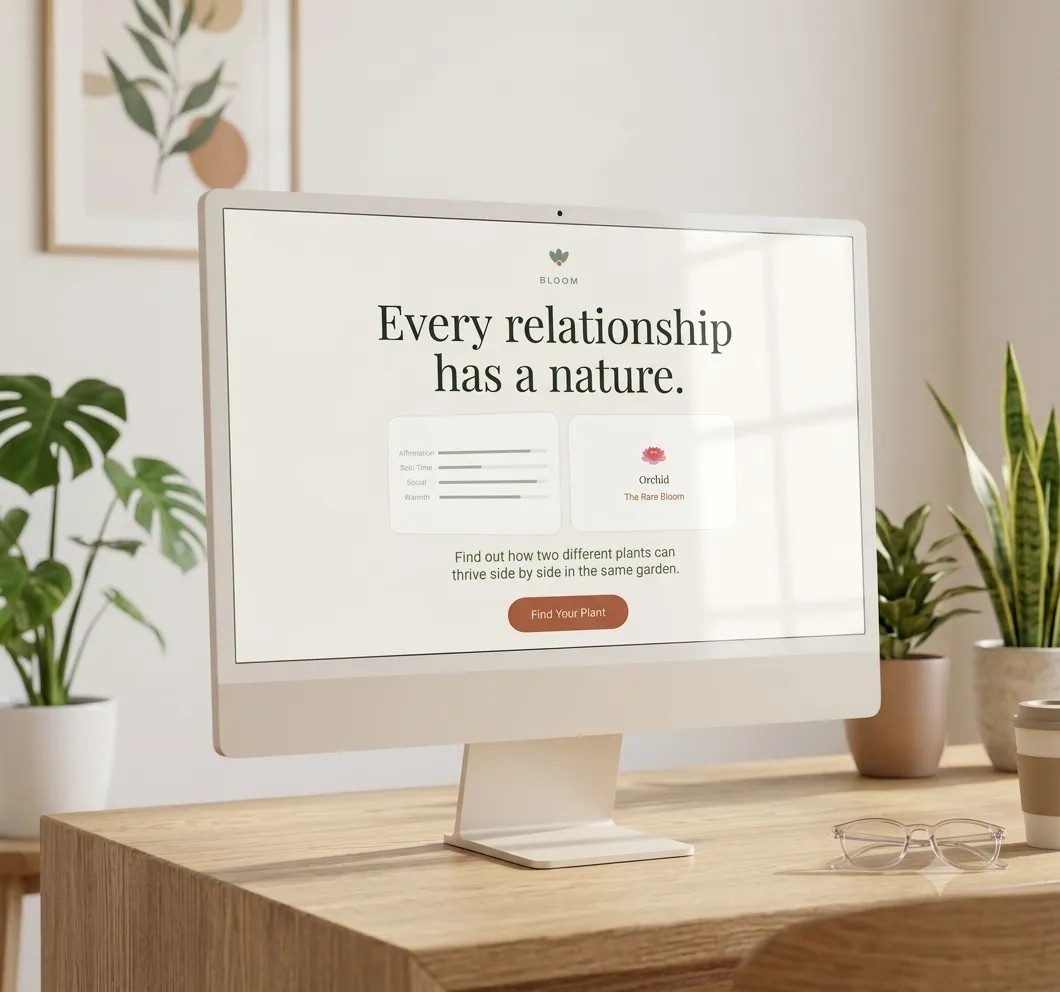
The first version worked. The homepage landed exactly where I wanted it: clean and editorial, opening on “Every relationship has a nature.”The quiz flowed straight through to a results page that set your trait charts beside your partner's.
It was fun to experiment and feel my creativity move while using Claude. My engineering background helped me pressure-test the scoring logic and product flow, while my design instincts shaped whether the result felt useful, honest, and human. The best part was taking the quiz with my partner when he came home that same day.
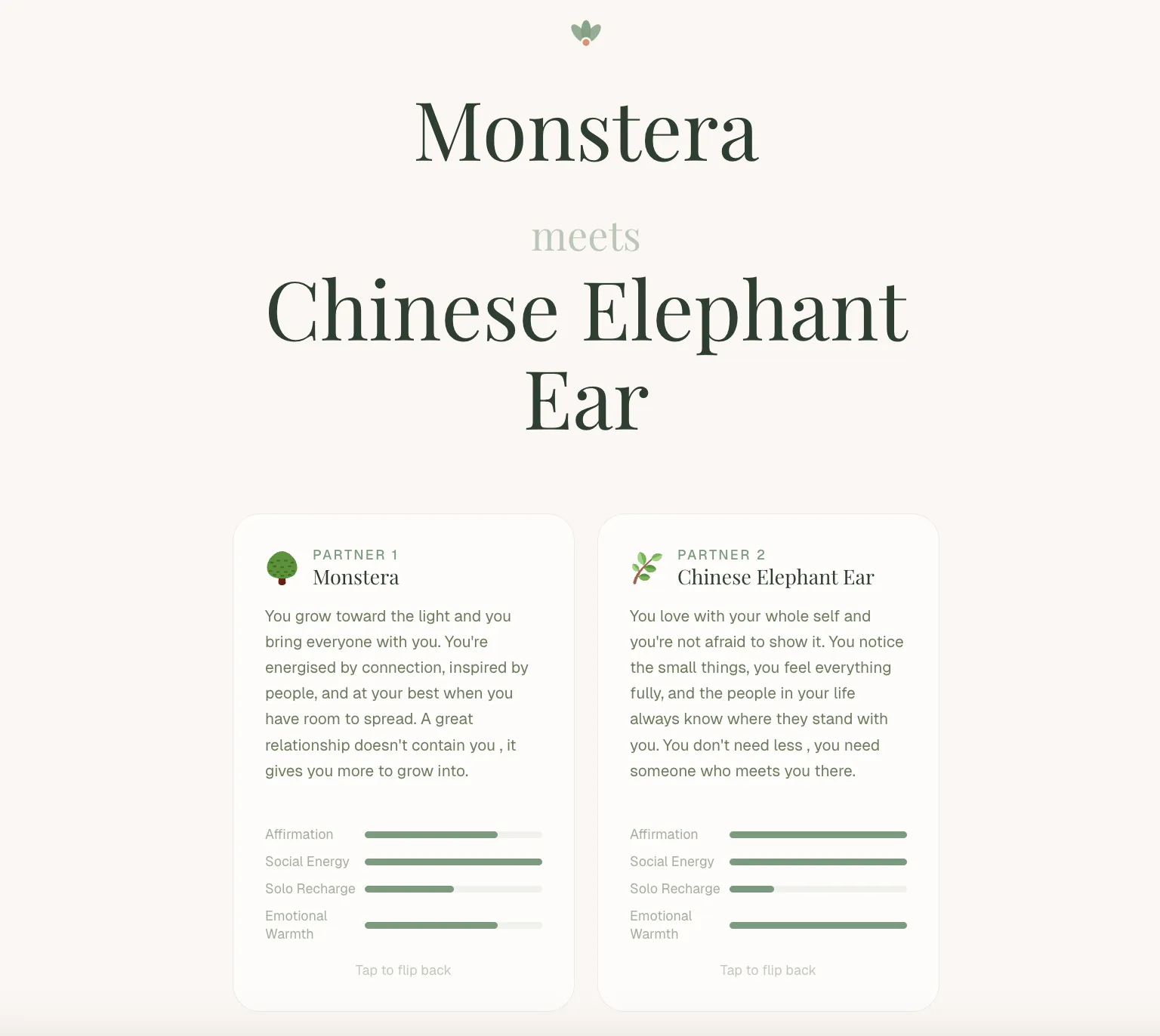
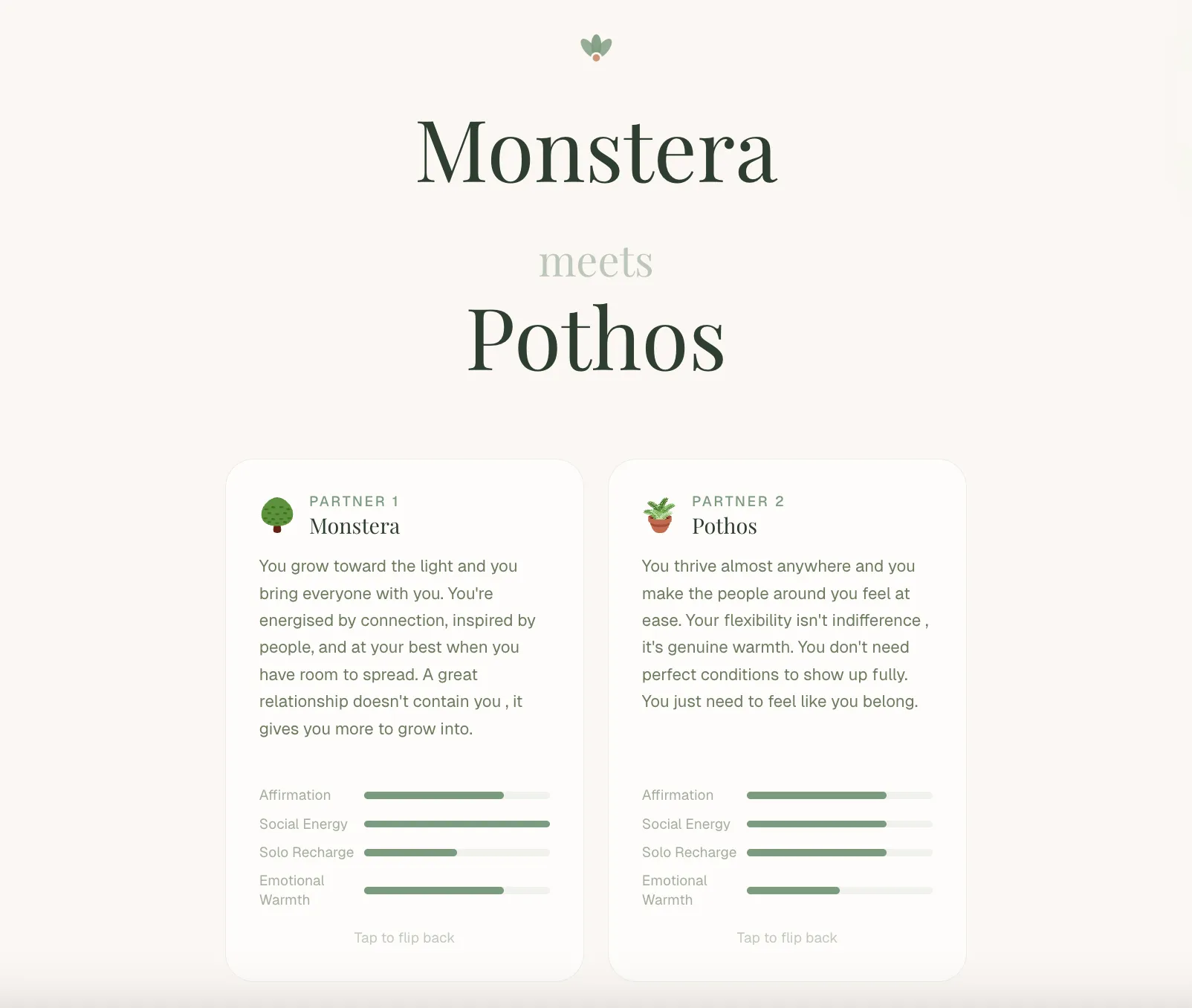
Three days later, I came back and closed the gap.
After testing with friends and coworkers, I had fun playing with the formatting, but the bigger opportunity was the voice. The quiz could not frame one partner as the easy plant and another as the difficult one: a cactus is not worse than a monstera; it just needs different care.
That language mattered. Everyone is unique, and god knows there are enough differences in the world; I wanted Bloom to help people feel understood instead of categorized. So the descriptions became more affirming, careful, and specific, written to make each person feel acceptable as they are.
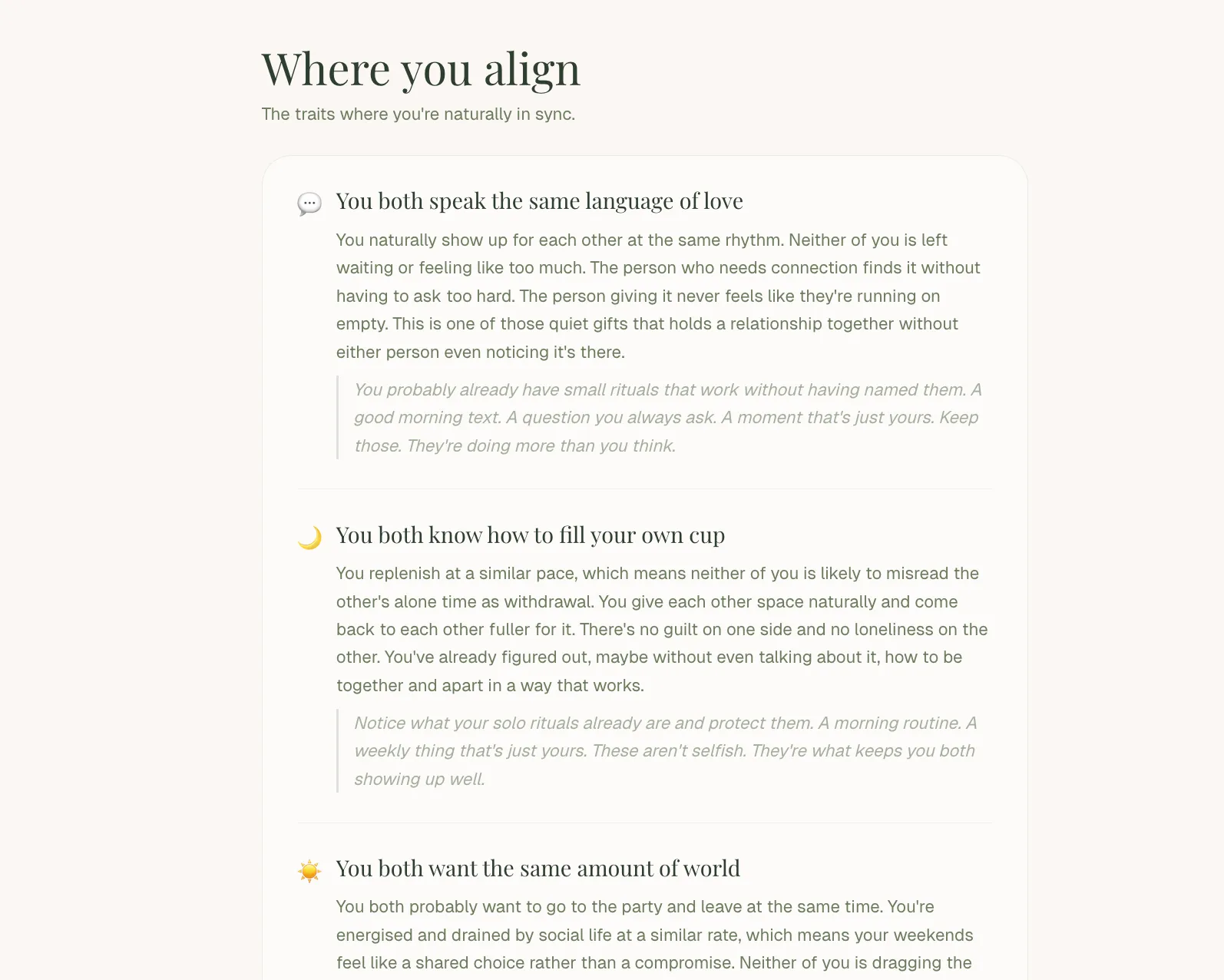
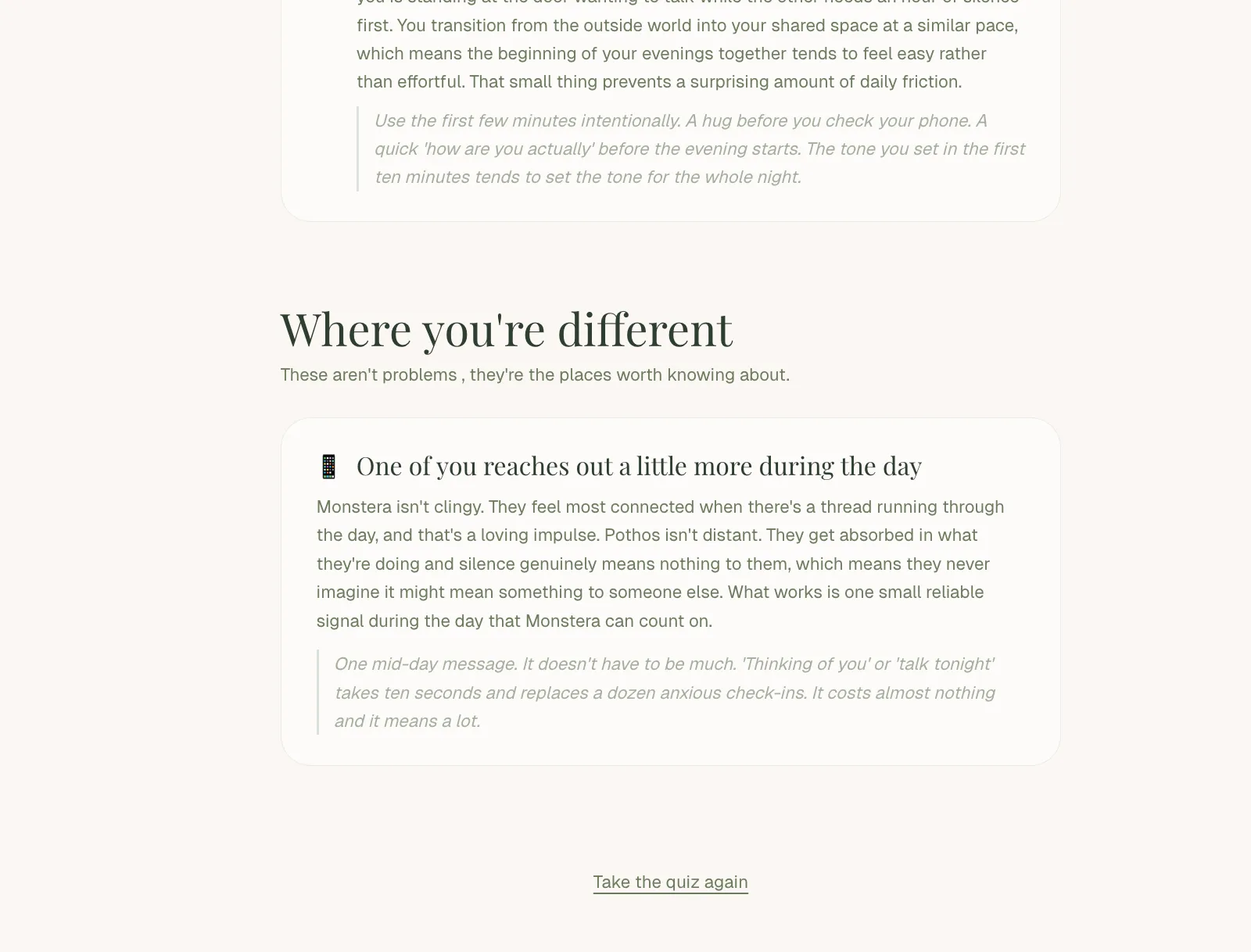
I also added a similar/different section so couples could better understand who they were to each other: where their care needs aligned, where they diverged, and how to talk about those differences without making either person the problem.
I'm an ideas person. I finally got to work like one.
Bloom let me work at the speed of my own judgment: try a flow, feel it, scrap it, and make the next call in real time. Once the tool barrier dropped, the work became less about permission and more about taste: deciding what felt useful, honest, and worth keeping.
Bloom came straight out of my own life, and that's the part that's stuck. Nearly every couple I show it to asks me to buy the domain and send it to them, not as a gag, but because they genuinely want it for their own relationship. The thing my partner and I were navigating, it turns out, is something a lot of people are quietly working out too.